METHOD / COFFEE
VARIATIONS: 4
Aeropress
Compact and portable, manual pressure. Flexible and fast.
- Good to start with Standard Aeropress Official method. Standard position, faster and easier.
- Ultimate AeroPress (Hoffmann) Simple, forgiving recipe: 1:18, upright, long steep + swirl. No stir, no filter rinse, no preheat.
- Inverted Aeropress Inverted method for full immersion control. Sweet and balanced.
- WAC 2024 (Stanica) 2024 World AeroPress Championship winning recipe. Upright position, short brew at 84°C with a cold bypass in the carafe to lock aromatics.
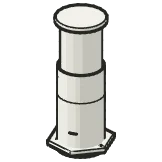
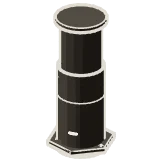
Optional: get to know each piece of the bench before you start.
The perforated cap holds the round paper filter at the end of the chamber. The coffee comes out through it when you press.
[01]How the Aeropress works
The Aeropress combines full immersion with manual pressure through a paper microfilter. It is nearly indestructible, fits in a backpack and forgives mistakes — the extraction window is wide and the filter holds back fines, so even an imperfect brew is drinkable.
It is also the most flexible method in the house: by changing ratio and dilution, the same device delivers anything from an espresso-like concentrate to a light filter-style cup.
[02]Grind, ratio and temperature
A medium-fine grind is the default across every house recipe. Ratio varies widely by style: from a 1:9 concentrate (WAC 2024) to 1:18 filter-style (Hoffmann). So does temperature: the official method uses 80°C, championship recipes sit at 84–85°C, and Hoffmann goes to 95°C. In the Aeropress, low temperature is not a mistake — it is a stylistic choice that favors sweetness and tames bitterness.
[03]Upright or inverted
Upright, coffee starts dripping as soon as water goes in — a faster brew with zero flip risk. Inverted seals the chamber during immersion, giving full control of contact time, at the cost of the flip.
Among the house recipes: Standard (official), Ultimate (Hoffmann) and WAC 2024 (Stanica) brew upright; the Inverted is the only upside-down one. Start with Hoffmann for error tolerance, move to the Inverted for full-immersion sweetness.
[04]Common mistakes
Pressing fast and hard — the press should take 20 to 30 seconds and stop at the hiss of air; pairing a too-coarse grind with a short steep, which brews watery; and, when inverted, screwing the filter cap on loosely and spilling everything at the flip. If the plunge feels too stiff, the problem is a too-fine grind, not a lack of strength.