METHOD / COFFEE
VARIATIONS: 2
Moka Pot
Italian stovetop with steam pressure. Strong and intense.
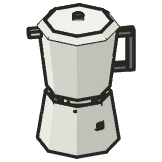

Optional: get to know each piece of the bench before you start.
Holds the water. On the heat, steam pushes the water through the funnel and the coffee up to the collector.
[01]How the moka pot works
In a moka pot, steam pressurizes the base and pushes hot water up through the coffee at 1 to 2 bar. It is not espresso — espresso needs ~9 bar — but it is the most intense coffee you can make without a machine: concentrated, full-bodied, around 1:8.
The method’s challenge is thermal: the base sits on the flame for the whole brew, and too much heat at the end of the cycle is what creates the burnt bitterness that gave the moka its bad reputation.
[02]Grind, ratio and temperature
Fine to medium-fine grind — coarser than espresso — with the ratio fixed by the hardware: basket filled level to the rim, water up to the valve (~1:8). The parameter you truly control is heat: starting with hot water in the base and using medium-low flame shortens the time the coffee spends cooking over the stove.
[03]Which recipe to pick
The Standard Moka (Bialetti) is the classic ritual with hot water in the reservoir to speed up the cycle. The Ultimate Moka (Hoffmann) adds the two tricks that clean up the cup the most: medium-low heat throughout and killing the brew at the first gurgle — the final sputter is superheated steam extracting the burnt flavors, and cutting it off is the cheapest upgrade a moka can get.
[04]Common mistakes
Starting with cold water — the base takes minutes to heat and the coffee cooks before it extracts; tamping the basket, which raises pressure and bitterness (level it, never compact); high flame "to go faster"; letting it sputter to the end; and keeping the pot on the heat once done. Serve immediately — or run the base under the tap — to stop extraction at the right point.